
Over the last few months, our focus has been on low back pain with and without leg referral, also called SCIATICA. I have focused on the different sources of pain and potential injuries that may cause low back pain and how and when those injuries may lead to SCIATICA. If you have followed along, you understand that SCIATICA is a symptom, consisting of pain in the leg, along the path of the SCIATIC nerve. Now, let us address the outcomes following a painful episode.
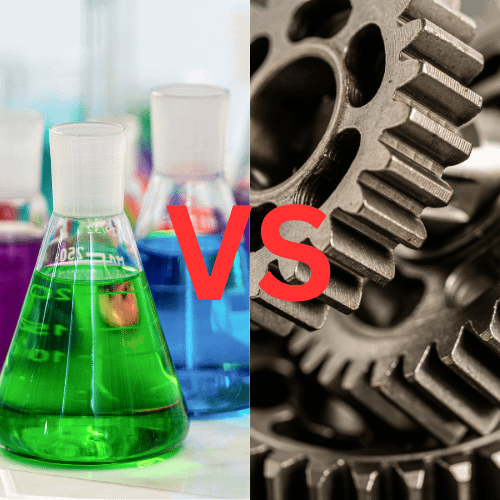
Pain will result as the outcome from either a chemical irritant or a mechanical irritant. Chemical irritants from inflammation, toxins or pathological processes will “irritate” the tissues they surround signaling a painful sensation to the brain. Mechanical irritants occur with movement and may lead to altered movement patterns, degeneration, bone spurs, tears, breaks or compression resulting in damage to tissues leading to a sensation of pain. The logical treatment for either of these issues is to remove the problem, whether that means removing the chemicals i.e. reducing inflammation, or improving the mechanics i.e relocating a dislocated joint.
When we apply this concept to low back pain with SCIATICA, we want to remove the chemical irritants and the physical obstructions. Sciatica from a disc bulge will have both of these processes at work in many cases. The damage to a disc may cause a chemical reaction, i.e there is a tissue tear (to some extent), then a leakage of blood and inflammatory fluids which cause chemical irritation. If you take an anti-inflammatory and your pain goes away, then there was some chemical irritation that cleared up. However, if the anti-inflammatory did not do much, and your pain comes on more with motion, likely there is a mechanical action that is irritating tissue. And, you can have both of these at the same time. The answer then may be to use a combination of treatments to remove the chemical and mechanical irritations to help your pain.
Removing the chemical irritation may require medication or sometimes even rest with some ice or heat. However, removing the mechanical irritants are not always that easy. Let us consider an example of a disc bulge with nerve compression in a 35 y.o male with referred pain down the R leg to the lateral calf. He is also what we call “antalgic to the L” or in other words, he is leaning to the L in a standing position. The history shows he was leaning forward and turned while lifting a heavy object and felt a pop in his back. He was able to move immediately after, but progressively got worse over night and the following day he could not get out of bed. Eventually he stood up and couldn’t straighten his spine from a left lateral tilt because it caused too much pain with shooting pain down the leg. He self treated with Naproxen for a few days which helped a lot with his pain, but he still was having difficulties standing straight. After evaluation he was diagnosed with a disc injury that was affecting the nerve on the R side of his spine. Treatment consisted of flexion-distraction to the spine to treat the disc injury, and exercise progressing from positions of relief, core strengthening and nerve flossing and back to full body strengthening program. His initial Naproxen use, helped him with the inflammatory reaction or the chemical irritation. The disc injury, likely a bulge in this case, is a physical structure causing some compression which was evident from the lateral tilt and the referred pain down the leg. In this case, the physical structure was treated to help take pressure off of the nerve. In my office, I use a technique called flexion-distraction which helps relieve the pressure on the disc by tractioning the vertebrae apart very slightly. This is a physical action to change the structure. In addition, exercise is used to assist and reinforce the new motion. So now he has structural damage to the disc. Will this go away completely to the point where the anatomy looks the same as the pre-injury anatomy? Not likely. We cannot reverse any damage that was done. What most likely happens now is that some scar tissue forms at the area of damage to the disc. The disc may become “unbulged” i.e, the nucleus of the disc moves back, stays in the same location or moves to somewhere in between. The research shows that many people can have small to large disc bulges that are asymptomatic or show no signs of any damage on clinical testing. However, the disc is now damaged. Tissue starts to degenerate where there is some form of damage. In time, this disc may present as degenerative disc disease and may or may not cause symptoms down the road. The predictability of this is difficult. What we do know though, is that movement is beneficial for all structures in the body.
What about more chronic conditions and those with more extensive structural damage or progressive illnesses that cause SCIATICA? The answers are anywhere from clear. However, if we address the issue with the same treatment as removing the chemical and mechanical irritants, we will see some change.
Chemical irritants do not necessarily need to be addressed with medications. Our nutrition plays a large role in the chemical makeup of our bodies. Making sure we are getting adequate nutrition helps in the healing process and ensuring the good chemicals in our body are not only present but helping with adequate cellular turnover and the production of tissue components needed for optimal performance.
Chronic physical obstructions, like a bone spur, can make mechanical sources of low back pain harder to treat. Surgical interventions may be able to remove or fix some structural issues, but not without their own risks. Often, extensive bone spurs can be removed, but filing down bone may lead to further growth or more extensive growth at the same sight. And a small bone spur may not be enough to warrant surgical intervention. What do you do then? The easy answer is to avoid movements or activity that aggravate the injury. Easier said than done.
In general, most pain from SCIATICA will go away. You may have further problems or relapses of pain down the road due to the initial injury. Try removing the chemical and mechanical irritants. This may be best addressed by visiting a healthcare professional for advice. For many people, chiropractic treatment can be a helpful option to address mechanical irritation and improve mobility. Then, the best thing one can do, in my opinion, is to maintain mobility throughout our bodies to the best of our ability in addition to maintaining a healthy diet full of nutrient dense foods.
I would love to help you or your loved ones with your low back pain and SCIATICA. If you have any questions about care, please contact our office at 905-529-2911 or via email to info@mmdchiropractic.ca. Online booking is available by clicking the link below.