
In the last topic on nerve entrapments within the body, I will discuss intercostal nerve impingement, injuries or conditions that may lead to this problem and how a chiropractor will approach these cases to ease the discomfort.
Intercostal nerve impingement results in symptoms of numbness, tingling or pain along the pathway of an intercostal nerve. To understand how this happens, let us first consider some of the anatomy of the rib cage.
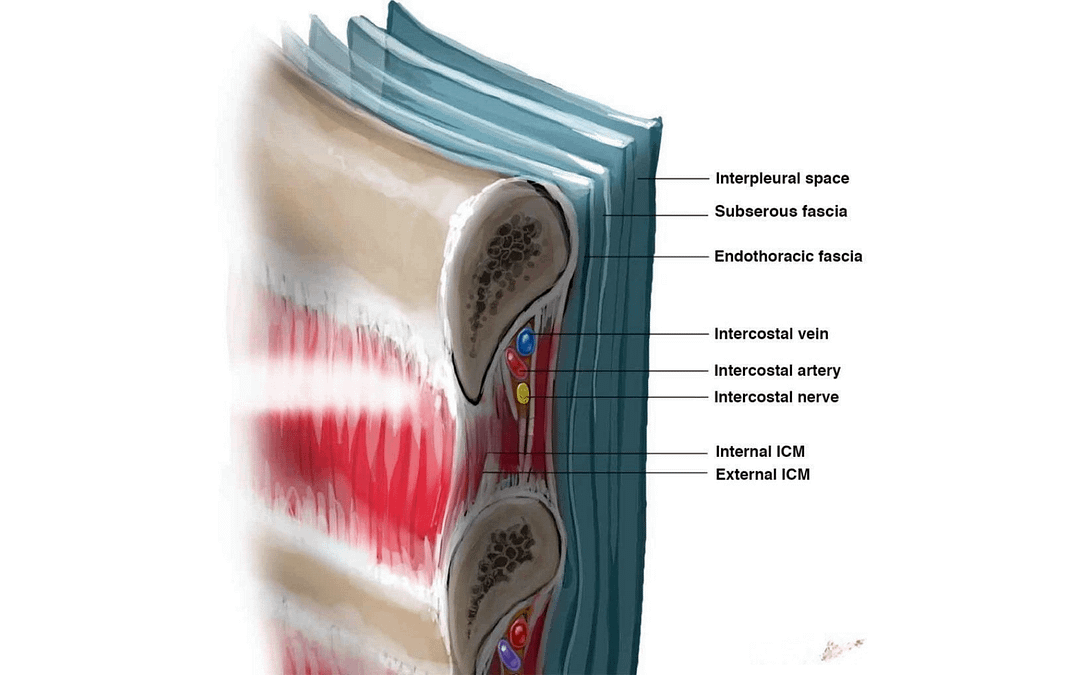
The intercostal space is the space between 2 consecutive ribs and contains 6 structures: 3 muscles, 1 nerve, 1 artery and 1 vein. There are 11 intercostal spaces on the right and on the left. Grouped together, the neurovascular bundle ( vein, artery and nerve) is located between the two deepest muscles (the internal intercostal muscle and the innermost intercostal muscle).
The intercostal nerves travel between each of the individual ribs on each side of the body. They are numbered in reference to the level of the spine where they originate. For example, there are 12 thoracic vertebrae with 12 thoracic nerve roots on each side of the body. The first intercostal nerve lies between the first and second rib and comes off of the 1st thoracic nerve root. The 12th intercostal nerve is often called the subcostal nerve, as it lies under the 12th or last rib.
The most common way to injure the intercostal structures is trauma. For example, a direct hit to the rib cage will not only potentially fracture the ribs, but may also rupture the artery, vein or compress/tear the nerve. Even if the neurovascular bundle is not damaged structurally, the swelling alone from a fractured rib can cause altered blood flow or nerve function in the immediate area.
The normal respiratory rate is 16-20 breaths per minute. That means, 16-20x during every minute of every hour, of every day our ribs are moving up and down. In order to move, the intercostal muscles are contracting to move the ribs up and down allowing the lungs to inhale and exhale. Add in exercise and this number increases. Muscles within the rib cage can become tight and can then compress the structures that pass through or around them making the muscular contraction a common culprit in intercostal nerve compression.
When there are problems in the thoracic spine, for example an acute thoracic compression fracture, similar intercostal symptoms, mainly numbness or tingling, may arise. As noted above, each individual intercostal nerve arises from its corresponding thoracic nerve root. Swelling around an acute thoracic compression fracture can irritate the nerve exiting at that level. In addition to compression fractures, other conditions that arise at the spinal level like degenerative disc disease, degenerative joint disease or bone or spinal pathologies can all cause similar symptoms.
Other conditions like scoliosis, can cause bony deformities that change the natural structural shape of the bones leading to asymmetrical pressures on various structures of the spine and rib cage.
Treatment for intercostal pain or numbness/tingling starts with an accurate assessment and diagnosis. Because the nerve is coming from the spine, ruling out a thoracic spinal condition is a must. A true intercostal neuritis or impingement will occur as a result of compression within the intercostal space. Treatment then results in taking the pressure off of the nerve within the intercostal space. Treatment may consist of the following:
- Instruction on proper breathing mechanics - often, an altered breathing pattern can tense the intercostal muscles leading to impingement of the intercostal nerve
- Stretching - instruction on opening up the rib cage to stretch the intercostal muscles alone may make a large improvement in the symptoms
- Soft tissue treatment - although it can be very tender to have done, ART to the intercostal muscles can make a big difference in your symptoms
- Laser therapy - this uses light therapy to help decrease any inflammation and improve pain levels
- Thoracic spine manipulation - excellent method to get the thoracic spine and rib cage moving properly and helping ease the nerve compression
- Ice and heat - Ice can be used to numb pain and help with inflammation. Heat is very soothing, often helping tight, contracted muscles relax.
- Topical lotions - non-medicated topical lotions may provide some relief by adding some heat or coolness to the skin.
As discussed, intercostal nerve impingement results in numbness/tingling or pain that may radiate from the mid back area around the ribs to the front of the body as a result of the intercostal nerve being compressed between two ribs. There are multiple conditions that may cause these symptoms including acute rib fractures, vertebral fractures, thoracic disc or joint injuries, as well as spine, rib or lung pathologies. As there may be multiple sources of your intercostal numbness or pain, it is recommended that you have your symptoms assessed by a healthcare provider of your choice. If you are looking for a chiropractic assessment and treatment, please click on the button below to be guided to our online booking system.