
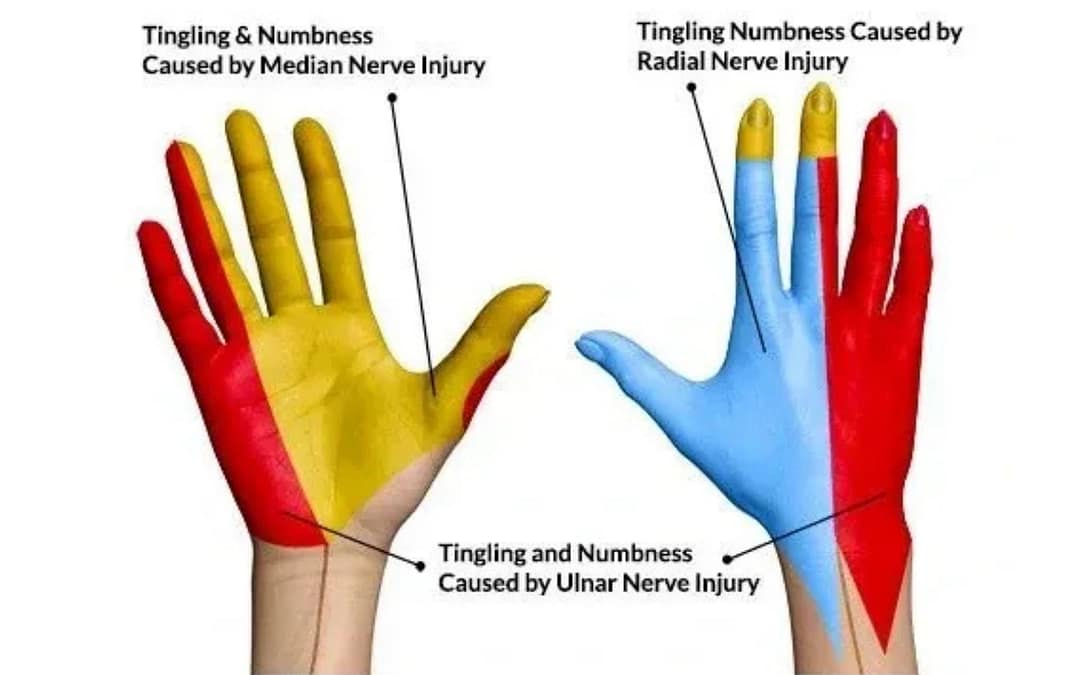
.When it comes to numbness and tingling in the hands, there are 2 common syndromes that may be diagnosed. This is not to say that there are no other injuries or problems in the body that can cause numbness or tingling in the hand, but Carpal tunnel syndrome and the Tunnel of Guyon syndrome are amongst the most common. I will explore the differences between these two syndromes in their symptoms, diagnosis and treatments.
Carpal tunnel syndrome is a condition in which the median nerve is compressed within the carpal tunnel. The carpal tunnel is an anatomical tunnel made up of the small carpal bones or bones of the wrist forming the floor of the tunnel. The roof of the tunnel is made up of the transverse carpal ligament. Running through the tunnel is the median nerve and the 9 tendons (4 from the flexor digitorum profundus, 4 from the flexor digitorum superficialis and flexor pollicis longus).
The tunnel of Guyon syndrome is a condition in which the ulnar nerve becomes compressed within the tunnel of Guyon. The tunnel of Guyon is a smaller tunnel within the wrist carpal bones on the medial side of the wrist. The floor of this tunnel is made up of transverse carpal ligament with the lateral border being the hook of the hamate and the medial border the pisiform bone. The roof of the tunnel is the palmar carpal ligament. The only structures running through the tunnel of Guyon are the ulnar nerve and the ulnar artery.
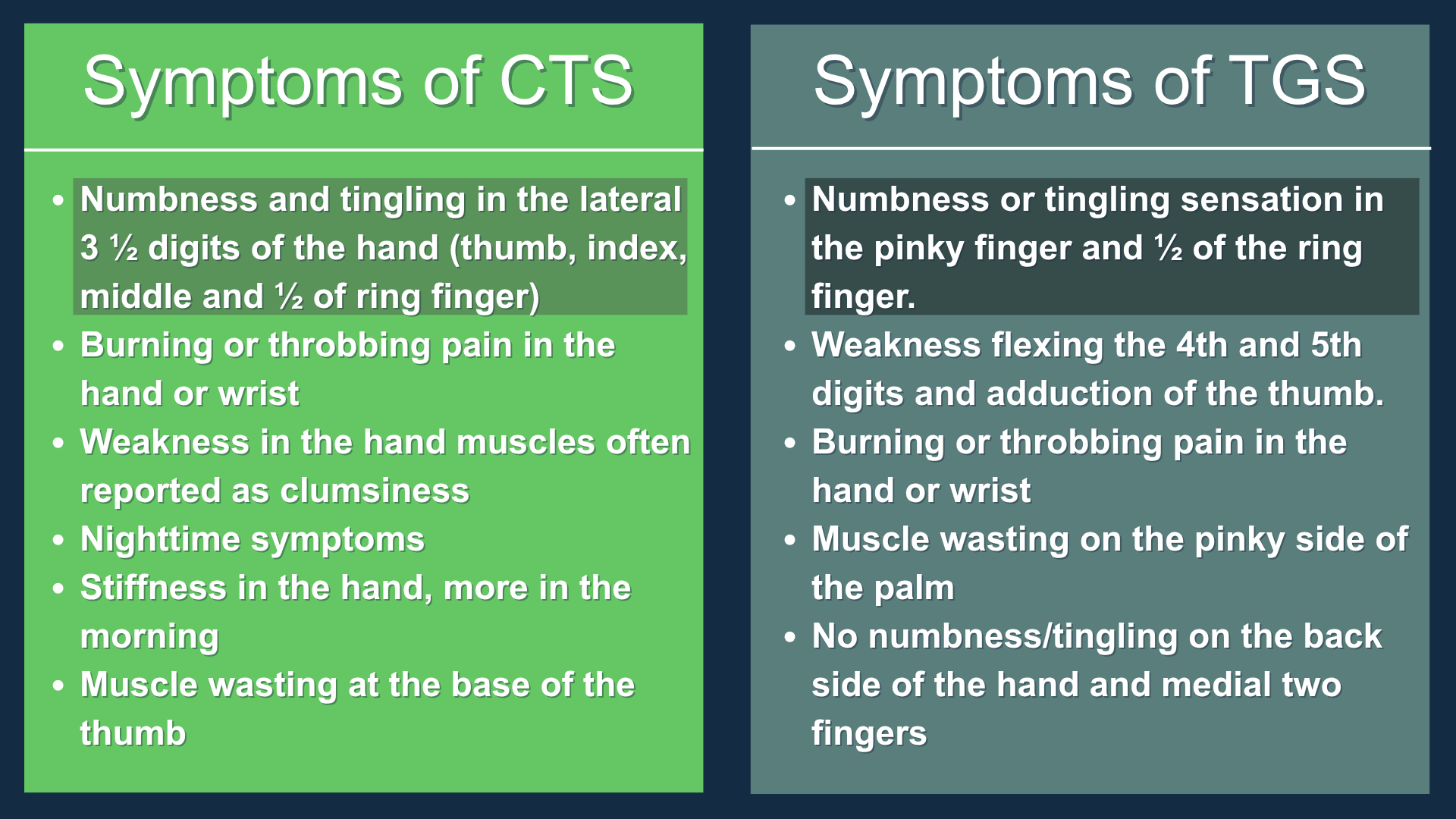
The symptoms associated with compression of the median nerve in the carpal tunnel vs the ulnar nerve in the tunnel of Guyon are include the following chart. Note: the ulnar nerve branches off into a deep and superficial branch within the canal. Symptoms are grouped into Zone 1-3 depending on where the compression is. Click to read more.
Repetitive use of the wrist can put stress on the transverse carpal ligament such that the median nerve or any of the tendons passing through the carpal tunnel become irritated. The same is true for the tunnel of Guyon. Repetitive use, fractures, ganglion cysts or other trauma to the wrist can cause a compression to either of these tunnels. Individuals working as electricians or in construction where there is a lot of wrist movement often have symptoms of carpal tunnel syndrome. Sports, like gymnastics, where there is impact to the wrist, will also report carpal tunnel symptoms. Cyclists often have issues with compression of the ulnar nerve.
Diagnosis of either one of these syndromes may involve xrays or CT of the wrist to rule out any fractures to the carpal bones. Electromyography (EMG) or nerve conduction velocity (NCV) studies are best used to diagnose the nerve involved and the level of at which the nerve is affected.
Treatment options, including those commonly used in sports injury treatment, can involve a number of non-surgical methods such as soft tissue therapy, laser therapy, joint manipulation, exercise, ultrasound therapy, splinting, and acupuncture. Surgical interventions for carpal tunnel or tunnel of Guyon are similar and simply involve cutting the roof of the tunnel, either the transverse carpal ligament in carpal tunnel syndrome or the palmar carpal ligament in the case of tunnel of Guyon syndrome. We often want to avoid surgery if possible, but sometimes surgery may give the best outcome based on the level of severity of the compression and the impact on one’s life.
If you are experiencing numbness or tingling in the hand, it is important to be evaluated by a professional in order to rule out other issues. If you are a regular reader, we recently discussed nerve irritations coming from Burners and Stingers as well as compression of the nerves at the level of the Cervical Disc. Please book in with us if you are experiencing any of these symptoms. As always, we appreciate your referral of friends and family.